Checkout our work

Parkar




Back
Back
Back
Most growth-stage companies don't call a Webflow agency because they hate their website.
They call because managing it has turned into a job nobody on the team signed up for.
Marketing wants campaign pages faster. Product needs launch support. Sales asks for tailored experiences by industry and persona. Leadership expects the website to show up in pipeline reports.
The website isn't broken. The operating model behind it is. Processes that worked with a smaller team and fewer initiatives crack under the weight of growth.
The website is now one of the most important assets in the business. The systems supporting it rarely keep up.
This is where the conversation moves from website management to website operations.
Websites get more complex as the business scales. New products need pages. Content programs expand. Campaigns get more sophisticated. Sales asks for industry-specific resources. What started as a marketing site ends up as a hub for half the company.
In a growth-stage company, marketing no longer owns the website alone. Product, sales, CS, recruiting, and leadership all have a stake.
Requests pile up. Every launch, campaign, event, and initiative adds to the queue. Without the right system, the queue turns into a bottleneck.
Early-stage, a website is a digital presence. Growth-stage, it's infrastructure for demand gen, product education, customer trust, and revenue.
That shift raises the bar. The site has to look good, run fast, scale cleanly, and move with the business.
Most companies underestimate this part. New content types, integrations, CMS requirements, and user journeys stack up fast.
Without a scalable setup, even routine updates take longer than they should.
Building an internal team feels like the obvious answer. You get control, and the team learns the business deeply.
The catch: a high-performing website needs a wide skill set that a small team rarely covers.
A modern B2B website needs strategy, UX, design, Webflow development, SEO, analytics, content architecture, and conversion work. Hiring all of that takes months, especially in tight markets.
Growth doesn't wait. Campaigns launch, content ships, and the site still has to move.
Internal teams get pulled into product launches, internal projects, ops requests, and cross-functional asks. The website slides down the priority list, and delays hit multiple departments.
Even strong internal teams have limits. When specialized work shows up, companies bring in contractors. Now you're managing employees, contractors, and vendors just to keep one website moving.
Freelancers are great for projects. Clear scope, specialized skill, fast turnaround.
The catch: growth-stage companies rarely have static website requirements.
Freelancers do their best work with a clear start and end. Growth-stage teams need continuous execution across campaigns, content, launches, and optimization. The website stops being a project and starts being a program.
Growth doesn't wait. Campaigns launch, content ships, and the site still has to move.
To cover all the work, companies end up with multiple freelancers. One for design, one for development, others for SEO, content, or analytics.
Each one is good at their craft. Coordinating them across timelines, briefs, and ownership is the part that breaks.
Freelancers ship their slice. What goes missing is the person thinking about the website as a system. Short-term fixes pile up and turn into long-term problems.
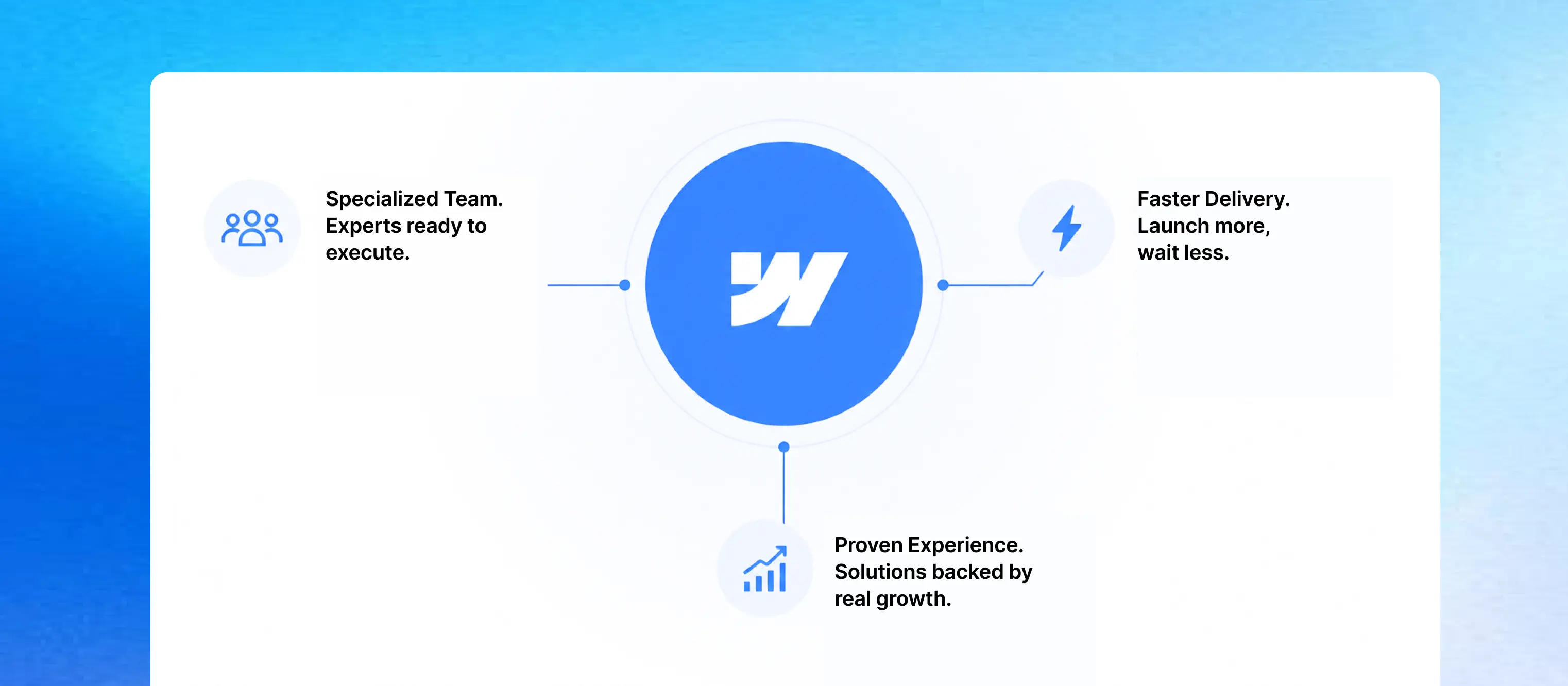
When website operations get complex, the answer isn't more hands. It's a better operating model. A specialized Webflow agency gives you that.
You get strategists, designers, developers, SEO specialists, and QA without spinning up a department. Instead of months of recruiting, you get a group that already knows how to work together.
Growth-stage teams run on tight timelines. Launches, demand gen, events, and content programs often run in parallel. Agencies are built for this pace, with set workflows, dedicated resources, and tested processes that keep quality high.
Agencies work across industries and stages. They see the same problems show up: CMS scale, content operations, SEO growth, website governance. That repetition means they spot issues early and apply fixes that worked elsewhere.
The biggest difference between an agency and other delivery models is the focus on long-term scalability.
A well-structured CMS makes publishing, managing resources, and supporting growth easier. Agencies design CMS architectures for expansion, not the version of the site that exists today.
Instead of designing pages one at a time, agencies build component-based systems. Marketing ships new pages faster, and the brand stays consistent across them.
The goal isn't to launch a website. It's to build a system that gets easier to manage as the business grows. Done right, the website supports growth instead of adding to the workload.

Most companies compare costs the wrong way. Salaries against retainers. Freelancer rates against project budgets.
The bigger question is what delays cost the business.
Landing pages launch late, campaigns launch late, and lead gen suffers. That eventually shows up in pipeline and revenue.
SEO work, content programs, and conversion projects lose value sitting in a backlog for months. The opportunity cost usually beats the direct cost of solving the problem.
Growth-stage companies don't run out of ideas. They run out of execution. The teams that grow fastest are the ones that ship quickly, test new bets, and adjust without getting stuck.
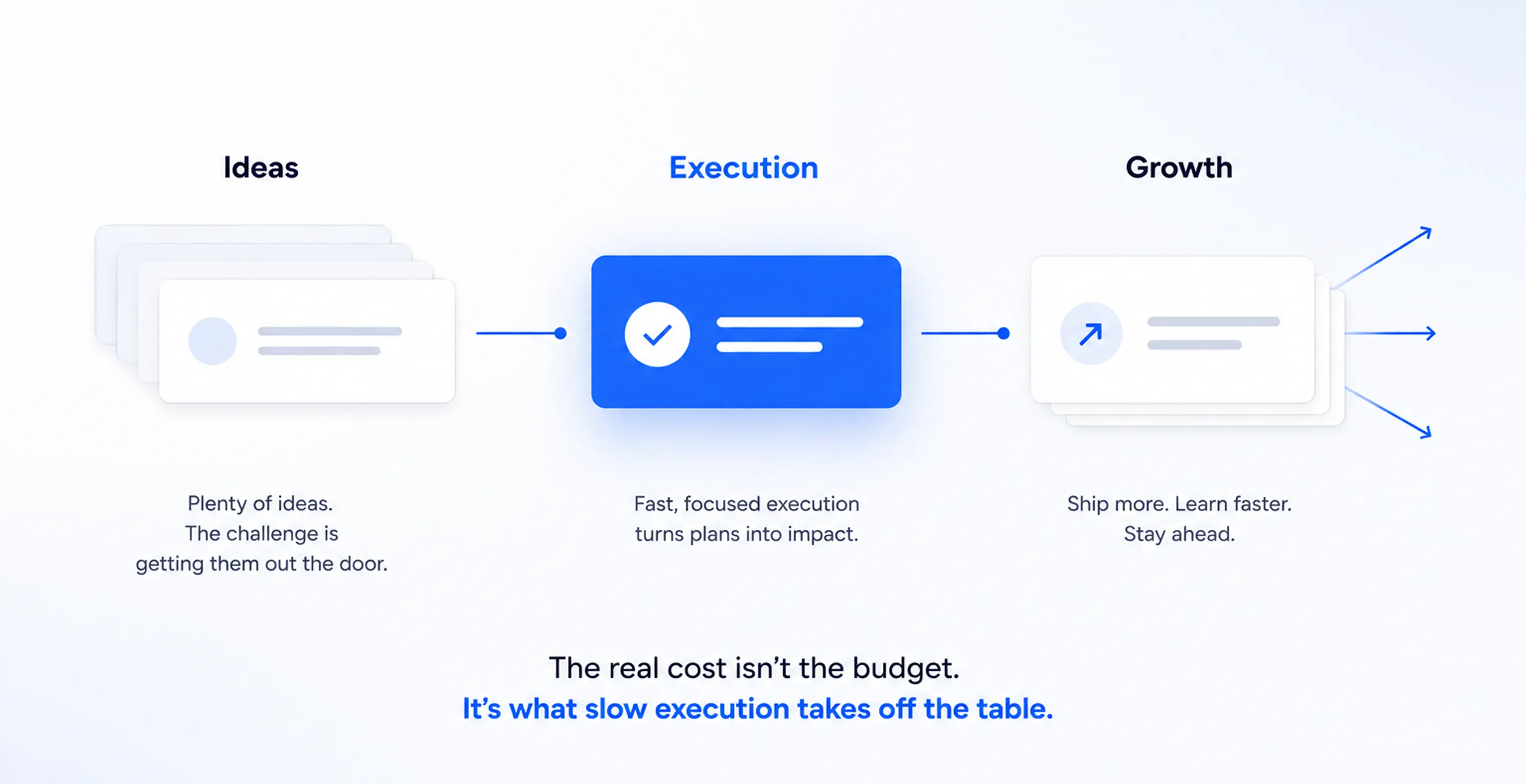
In-house gives you control. Freelancers give you flexibility. A Webflow agency gives you expertise, scale, and speed that's hard to build on your own.
If your website is now central to marketing, sales, and revenue, execution speed is the thing that decides who wins. That's why more growth-stage companies are picking a Webflow agency not as another vendor, but as the partner that helps them scale.

The journey’s just as exciting as the destination. So, what are you waiting for? Let’s hit the gas.