Checkout our work

Parkar



Back
Back
Back
For years, B2B marketers built their digital strategy around one goal: showing up on search engines.
Keyword research, technical SEO, backlinks, content optimization all of it pointed at the same outcome. Be there when a buyer searches for a solution.
The formula was simple:

Buyer behavior has shifted.
People no longer rely only on search engines to find information. They're using AI platforms and answer engines that read the question, hold the context, and respond directly.
Instead of clicking through ten blue links, buyers want the answer.
That changes the job of B2B marketing. The goal is no longer to rank. It's to be the answer.
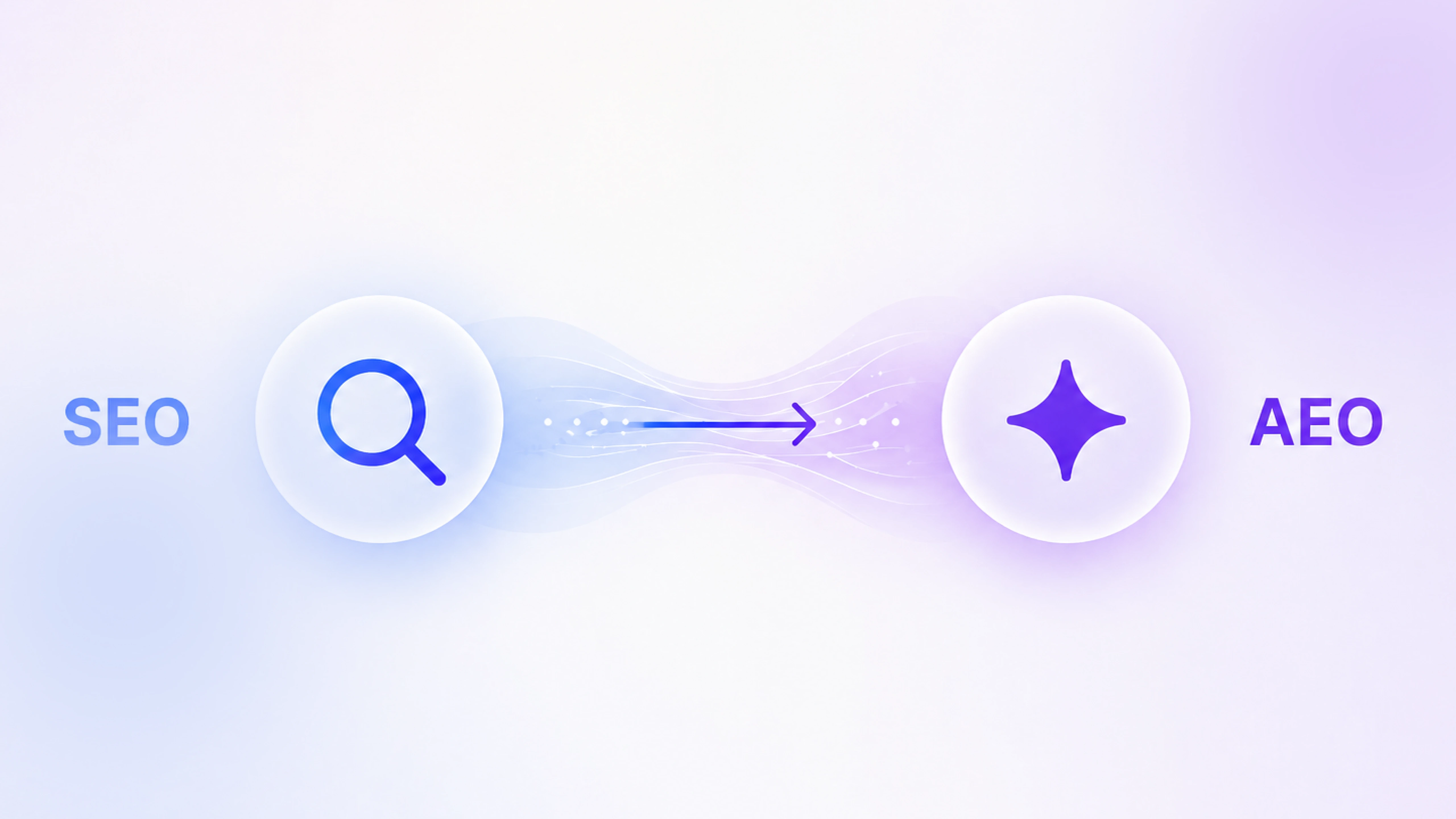
This is what Answer Engine Optimization (AEO) is about, and it's changing how B2B companies think about content, visibility, and how buyers find them.
Traditional search engines were built for discovery.
A buyer searching for "Best B2B website development company" gets a list of websites. They click through, compare services, read case studies, and decide.
Search engines are a starting point for research.
Answer engines work differently.
Search engines are a starting point for research.
A buyer might ask: "Which website development partners specialize in Webflow for enterprise SaaS companies?"
Instead of links, the answer engine pulls together a response based on what it knows.
The journey shifts from:

to

That changes the math on digital marketing.
AEO is the practice of creating and structuring content so AI-powered platforms can understand it, reference it, and use it in their responses.
SEO focuses on ranking. AEO focuses on being the most useful answer to a specific question.
AEO prioritizes:
The goal isn't only website traffic. It's to show up in the moments when potential customers are doing their research.

B2B buying decisions are complex.
Unlike a quick consumer purchase, B2B buyers spend weeks or months researching, comparing, and evaluating before they pick a vendor.
They ask things like:
Businesses used to answer these questions through blogs, guides, landing pages, and case studies.
The way buyers consume that information has changed.
AI tools are part of the research process now. Buyers use them to summarize, compare options, and understand solutions faster.
Your content has to do more than rank. It has to give a useful answer.
SEO is about visibility.
AEO is about authority.
SEO asks: "How do we rank for this keyword?"
AEO asks: "How do we become the best answer to this customer question?"
A keyword-first approach chases search volume and rankings.
An AEO-first approach prioritizes:
The brands that win won't just show up in search results. They'll be the source that AI engines cite.
Answer engines are changing how B2B companies write, organize, and distribute content.
SEO leaned heavily on keywords and rankings. AEO asks businesses to look past visibility and focus on being the most helpful resource in their space.
B2B buyers rarely search using simple keywords.
Their research starts with detailed questions, specific challenges, and clear goals.
A buyer looking for a website partner won't search "Webflow agency."
They'll ask: "How can a SaaS company migrate its website to Webflow without losing SEO performance?"
That changes how content gets written.
Instead of pages built around keywords, you need resources built around real customer conversations.
AEO-focused content should cover:
The brands that consistently answer these questions get recognized as reliable sources.
As AI tools enter the buyer journey, trust and credibility carry more weight.
Answer engines try to surface accurate, useful information. Brands that show genuine expertise have a better shot at being included.
B2B companies can show expertise through:
An article on "What is a website redesign?" gives a general overview.
An article on "How enterprise teams should approach a website redesign project" shows you've done the work.
The brands that teach build authority.

AEO needs content organized clearly.
Answer engines parse information and pull out the relevant pieces. If your content is buried in long paragraphs or poorly structured, AI systems will skip it.
Focus on:
Don't hide the important information inside dense prose. Tell the reader:
SEO often pushed businesses to create separate pages for each keyword.
AEO doesn't reward that.
You need to show complete knowledge around a topic.
Instead of one article on "Webflow migration," cover:
That builds topic authority. When you consistently provide useful information on a subject, you get recognized as the trusted source for it.
B2B buyers move through stages before they decide.
AEO asks you to create content for every stage.
Awareness stage:
Consideration stage:
Decision stage:
Cover the whole journey, and you influence decisions earlier.
AI-powered search is conversational.
People are dropping short keyword searches and asking full questions.
Not: "Enterprise website services"
But: "How can enterprise teams improve website performance and conversion rates?"
Your content has to sound natural and customer-focused. The closer it matches how people actually ask questions, the better chance it has of being surfaced.
As AI-generated content floods the internet, generic information loses value.
The brands that share original insights stand out.
Original content can include:
"5 challenges we hit while migrating enterprise websites" gives a reader more than a generic explainer on migration.
AEO rewards brands that contribute knowledge, not just summarize it.
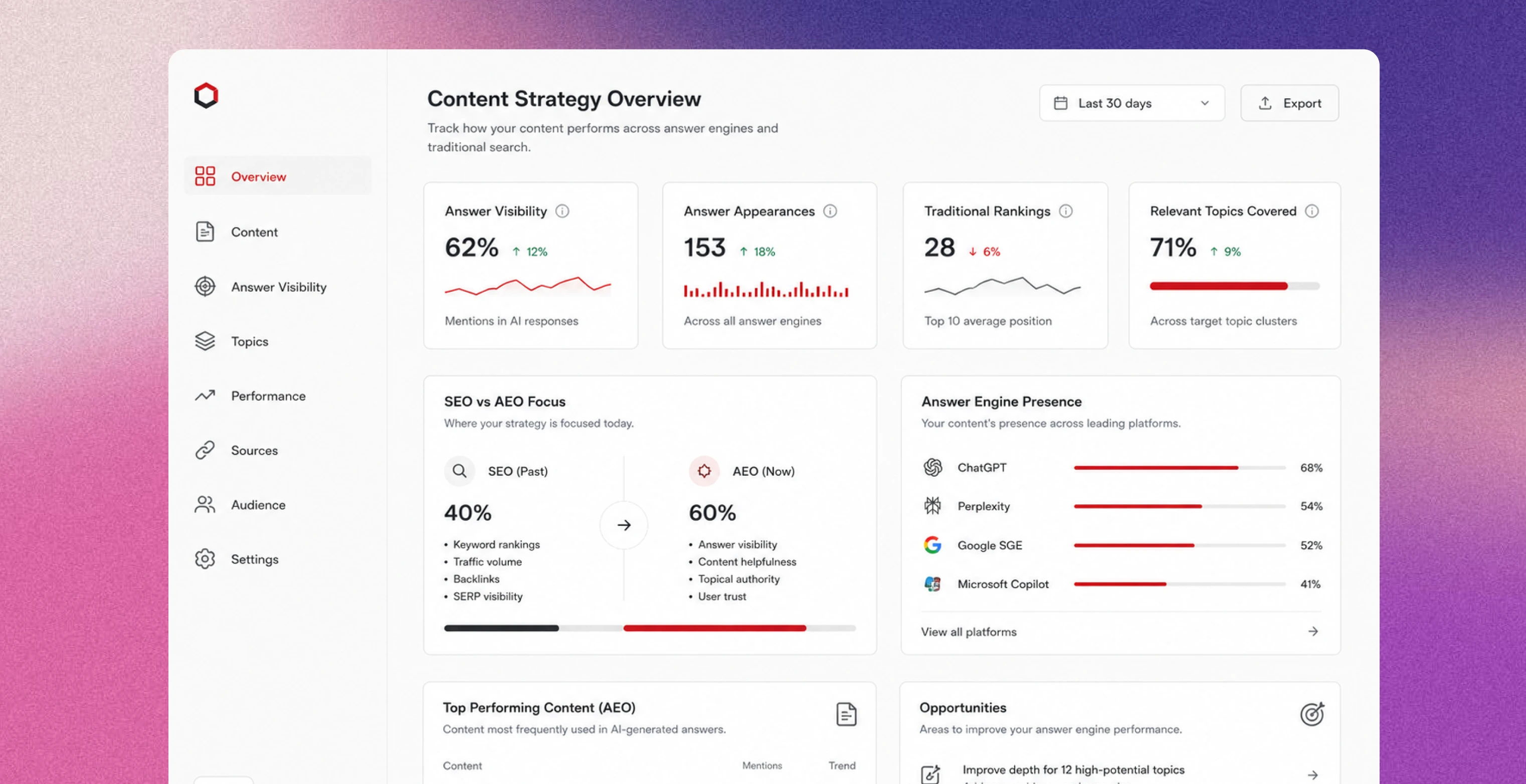
B2B research is getting more conversational.
Buyers use AI tools as research assistants to:
Your brand's first interaction with a prospect may not happen on your website. It may happen inside an AI-generated response.
If you're not there, you lose the opportunity before the buyer ever visits your site.
To win in an answer-driven world:
The future of content marketing isn't about producing more content.
It's about producing better answers.

The shift from search engines to answer engines is one of the biggest changes in digital marketing.
SEO made businesses discoverable.
AEO makes them trusted.
For B2B companies, success depends on understanding customer questions, giving useful answers, and building authority in your industry.
The brands that win won't just rank higher.
They'll be the answer buyers trust.

The journey’s just as exciting as the destination. So, what are you waiting for? Let’s hit the gas.