Checkout our work

Parkar



Back
Back
Back
Before a marketer drafts the first campaign, before a sales rep dials a single cold call, and well before your CRM starts collecting contacts, one member of your team is already out there working, performing, and being judged every single day: your website.
In a digital-first world, a website goes far beyond being a marketing asset. Think of it as a strategic contributor to your entire go-to-market motion. It speaks on your behalf, delivers your pitch, guides your audience, qualifies who’s serious and who isn’t and in many cases nudges a prospect closer to a decision long before anyone from your team enters the conversation.
Yet most companies either overlook this or keep pushing a website refresh to “someday,” as if it’s a side project. The truth is much bigger: your website becomes your first, most reliable and most scalable GTM hire.
Here’s why that matters.
A strong website never clocks out or waits for the workday to begin. No matter when someone arrives mid-morning or in the middle of the night, the experience remains consistent. Visitors get the same clarity, the same speed and the same message every time.
In many ways, a website functions like the most dependable SDR you could ever hire. It welcomes prospects right at the door, walks them through what they’re looking for, answers the usual questions and nudges them closer to taking the next step. And unlike a human team member, this one keeps your brand in motion around the clock, across every time zone, without missing a beat.
Most buyers won’t reach out immediately. They take their time, browse quietly, compare options and form early impressions based on your design choices, the tone of your messaging and how effortlessly they can find what they’re looking for.
A cluttered interface, unclear copy or sluggish performance can drain interest without anyone noticing. In contrast, a well-structured, fast and thoughtfully crafted website makes people feel confident right from the start. Your homepage, landing pages and product pages end up doing far more work behind the scenes than you realise.
And when trust, clarity and persuasion sit at the core of your GTM strategy, your website needs to be tuned with intention, not treated as an afterthought.
A website isn’t just a place people visit; the real action often happens there. A strong one goes beyond showing information and actually helps your audience make sense of your product in a way that feels clear and intuitive. It positions your brand confidently among competitors, brings forward the right trust signals, and encourages meaningful actions rather than random clicks.
A high-performing website helps:
Whether you are product-led, sales-led or content-led, your website sits at the centre of your GTM funnel. It can be a frictionless path to growth or a silent blocker.
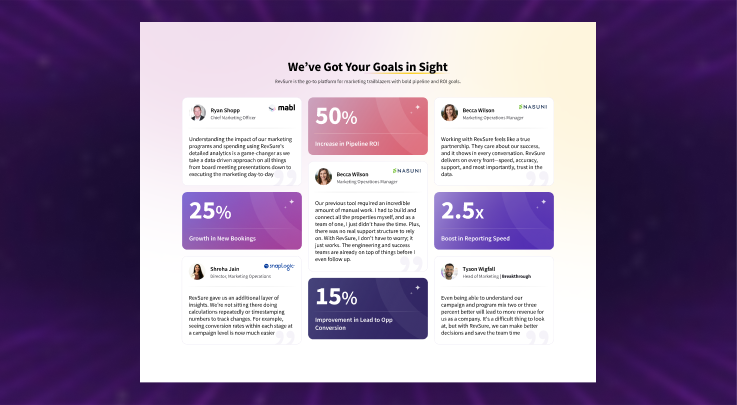
Take a step back for a moment. A website never plays a single, isolated role; several teams depend on it simultaneously.
It’s the central nervous system of your go-to-market strategy. Ignore it and you’re missing massive leverage.
A business can’t bring in a new sales rep for every campaign or hire a support lead for every region, people simply don’t scale that way. A website, on the other hand, expands with far more ease.
A new market launch becomes as simple as creating a localized page. A product rollout just needs updates to the product hub. When you want to test a new value proposition, you can run experiments instantly without waiting for a team to catch up.
The website grows and adjusts alongside the business, without onboarding cycles, recruitment delays or added overhead. Every improvement shows up immediately and delivers measurable impact from the moment you publish.

Your website already plays an active role in your GTM motion, even if you haven’t officially acknowledged that yet. The real question is whether you’re treating this asset like a core member of your team.
Is the positioning sharp enough? Are the pages fast, clear and genuinely geared toward conversion?
Does the messaging stay consistent with your brand voice and the journey your buyers follow?
Does the site support your growth plans, or does it quietly let warm interest slip away?
When the answers start feeling uncomfortable, that’s usually the moment to run a proper performance review and consider an upgrade.
In a digital-first world, the earliest and most scalable GTM hire rarely comes in the form of a person.
Your website takes that seat and deserves to perform like your strongest contributor.

The journey’s just as exciting as the destination. So, what are you waiting for? Let’s hit the gas.